
For years, I was the poster child for budgeting apps. I downloaded every single one that got recommended on financial forums and personal finance subreddits. Mint, YNAB, Personal Capital, PocketGuard, Goodbudget, EveryDollar - you name it, I tried it. I connected my accounts, set up categories, created budgets, and for about two weeks, I would religiously track every single purchase. Then life would get busy, transactions would pile up uncategorized, and I would feel so overwhelmed that I would just delete the app entirely.
This cycle repeated for nearly five years. I must have started fresh with budgeting apps at least fifteen different times. Each time, I told myself that THIS would be the attempt that finally stuck. I even paid for premium subscriptions thinking that having skin in the game would motivate me to actually use them. Spoiler alert: it did not work.
The problem was not the apps themselves. Most of them are genuinely well-designed and offer features that would be incredibly helpful for the right person. The problem was that the apps did not match how my brain actually works with money. I needed to figure out my own system, and that journey took me about a year of experimentation.
Why Budgeting Apps Failed Me
Looking back, I can identify several reasons why these apps never stuck for me. First, there was the constant need for categorization. Every time I bought something at Target that included groceries, household items, and a random throw pillow, I would stress about how to categorize it. Should I split the transaction? Just pick the biggest category? This tiny decision would actually stop me from opening the app altogether.
Second, the apps gave me too much information. I did not need to know that I spent .50 more on coffee this month compared to last month. That level of detail was not helping me make better decisions - it was just making me anxious. I would see all these colorful pie charts and trend lines and feel completely overwhelmed by the data.
Third, and this was the biggest issue, budgeting apps felt like homework. Opening the app was like opening a textbook for a class I was failing. There was always something I needed to do - transactions to categorize, budgets to adjust, goals to update. It was never a pleasant experience.
The Manual System I Developed
After my fifteenth failed attempt at using a budgeting app, I decided to go completely analog. Not because I am against technology, but because I needed to understand my money habits at a fundamental level before adding any digital tools back into the mix.
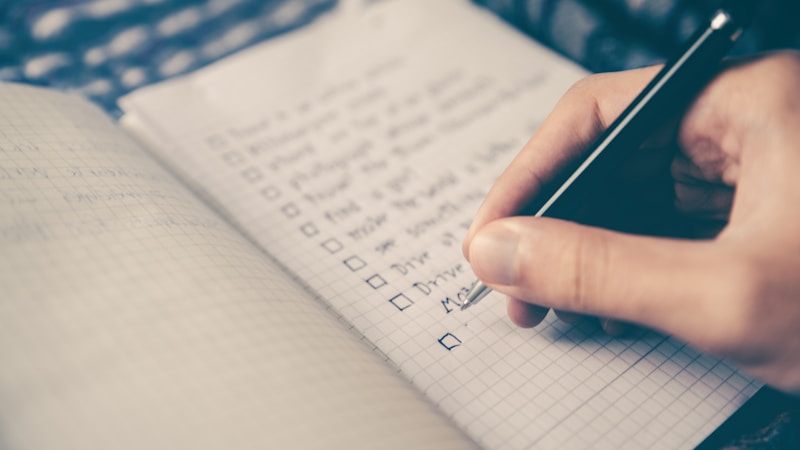
I started with a simple notebook. Every morning, I would write down my bank balance. That was it. No categories, no budgets, just one number. This took about thirty seconds and required no decision-making. After about two weeks of this, I started noticing patterns. I could see when my balance dropped significantly and naturally remembered what I had spent money on.
This evolved into what I call the Daily Check-In system. Every morning with my coffee, I spend about five minutes on my finances. I write down my checking account balance, note any bills due that day or that week, and make a mental note of any big purchases I need to make soon. That is literally the entire system.
The Envelope Method, Modified
For variable spending like groceries, entertainment, and personal purchases, I use a modified envelope method. But instead of physical cash envelopes, I use a separate checking account that I keep specifically for spending money. At the beginning of each month, I transfer a set amount into this account. That is my spending money for the month, and when it is gone, it is gone.
This account has its own debit card that I use for all non-fixed purchases. I never have to categorize anything because I already know what this money is for - it is for everything that is not a fixed bill. Groceries, dining out, entertainment, random Amazon purchases, gas, coffee - it all comes from this one account.
The beauty of this system is its simplicity. I do not need to track where the money goes within this account. I just need to know that I am not running out before the end of the month. If I notice the balance getting low around the 20th, I know I need to slow down on spending. No app required.
Fixed Bills on Autopilot
For fixed monthly bills like rent, utilities, insurance, and subscriptions, I use a different approach. All of these come out of my primary checking account, and nearly all of them are on autopay. I maintain a simple spreadsheet that lists every recurring bill, the approximate amount, and when it hits my account.
Once a month, usually on the 1st, I glance at this spreadsheet to make sure nothing unexpected is coming up. This takes about two minutes. I also keep a buffer of about in this account so that timing differences between paydays and bill due dates never cause issues.
What I Do With The Extra Time
One thing I noticed after switching to this system is how much mental energy I freed up. When I was using budgeting apps, I was constantly thinking about money. Did I stay within my dining out budget? Should I move money from the clothing category to the entertainment category? Is my spending on track this month? These questions lived in my head rent-free, causing low-level stress throughout the day.
Now, I think about money for about five minutes each morning, and then I do not think about it again until the next day. The system is simple enough that there are no decisions to make, no transactions to categorize, no reports to analyze. I either have money in my spending account or I do not.
Is This System For Everyone?
Absolutely not. If you love data and find detailed tracking motivating, budgeting apps are probably great for you. If you are trying to get out of debt and need to track every penny, the detailed approach of apps like YNAB might be exactly what you need. If you are naturally organized and enjoy optimizing your spending categories, apps will serve you well.
But if you are like me - someone who has tried and failed with budgeting apps multiple times, someone who feels overwhelmed by too much financial data, someone who needs systems to be effortless or they simply will not stick - then maybe it is worth trying a simpler approach.
Results After One Year
Since switching to this manual system, I have saved more money than I ever did while using apps. Not because the system is magic, but because I actually stick with it. The best financial system is the one you will actually use, and for me, that means something simple enough that it feels effortless.
My savings rate has increased from around 10% to about 25% of my income. I have an emergency fund for the first time in my life. I have not overdrafted my account once in the past year. And most importantly, I do not feel stressed about money anymore. I know exactly where I stand every single morning, and that consistency has given me more financial peace than any app ever did.
If budgeting apps work for you, that is genuinely wonderful. Keep using them. But if you have been struggling like I was, know that there are other options. Sometimes the most effective tool is a notebook and five minutes of your morning.
Helpful Resources
Related Articles on Articalo
- Best way to track monthly expenses without spending hours on spreadsheets
- How I Paid Off $87,000 in Student Loans in 3 Years
- The Credit Card Strategy That Raised My Score 150 Points



This changed my perspective completely. I was doing it all wrong before reading this.
Love the practical tips! Already started implementing #3 and seeing results.